




Each investment in the military has to be a well-planned one for its long-term operational strength, along with cost efficiency. This article explores how spending can be better aligned with strategic priorities and performance improved over time. It highlights how to reduce waste while sustaining capability and readiness.
Understanding the Value of Military Investments
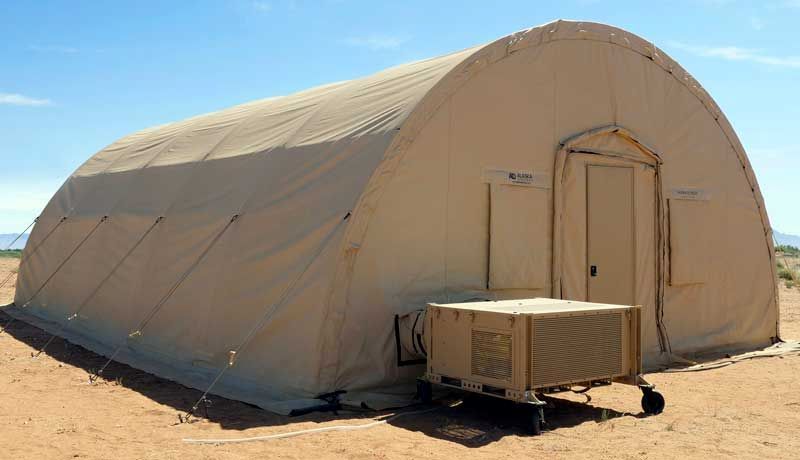
In many operational environments, climate control is essential, both for personnel and sensitive equipment. A custom environmental control unit (ACU or ECU) maintains temperature, humidity, and air quality under extreme conditions.
These are designed to exacting specifications and tested to ensure reliability, having performance and durability standards that reduce long-term maintenance and replacement costs. Such systems are representative of investments in which higher upfront costs are offset by operational effectiveness and lower lifecycle expenditure.
According to the Stockholm International Peace Research Institute, global military expenditure reached US$2.718 trillion in 2024, which is a 9.4 per cent increase over 2023. The military burden, globally, increased to about 2.5 per cent of global GDP. Even a one per cent improvement in efficiency is able to save billions annually.
A study referenced in Peeref in 2025 covering 135 nations indicates that more efficient defense spending strengthens this positive link between military budgets and national economic performance, whereas inefficient ones often fail to give proportionate security returns.
Flexibility also defines value. Systems that allow modular upgrades or that use open architecture can adapt to evolving operational requirements, extending usefulness and protecting long-term investment.
Aligning Resources with Strategic Goals
Investment aligned with strategic objectives means that spending supports the highest-priority missions. Programs should be a reflection of whether the focus is rapid deployment, long-term presence, resilience, or force projection.
Expeditionary operations will require lightweight shelters, modular support systems, and rapid assembly infrastructure. Sustained operations will require investment in durable infrastructure, maintainable systems, and energy-efficient support units.
All procurement should be mapped directly to mission outcomes. Resource allocation should be informed by risk assessments, including supply chain vulnerability, technological obsolescence, and geopolitical uncertainty. Where threats evolve, resources can shift efficiently only if alignment is well established.
By linking every system-from command posts to medical shelters-to strategic priorities, military organizations reduce the likelihood of overspending on low-value programs while addressing critical capability gaps.
Leveraging Technology for Greater Efficiency
While it may introduce other efficiencies that cut costs in the long run, there should be a focus on the maturity of those systems. Condition-based or predictive maintenance can replace traditional schedules, reducing downtime and repair costs. Upgrades are easily engineered into modular subsystems that reduce total replacement costs, while firmware-upgradeable control systems extend system life without major capital investment.
Modern ACUs and ECUs incorporate remote monitoring, adaptive control, and fault diagnostics. These features have improved energy efficiency and the timely detection of faults, maintaining shelter functionality in extreme conditions. Hybrid power support might further be integrated, either via solar pre-conditioning or waste heat recovery, to reduce operational fuel requirements and logistic burdens.
Energy efficiency, modularity, and interoperability are of paramount importance when adopting technology. Systems that are easily integrated with the present infrastructure without much redesign create minimal additional costs and reduce the possibility of technological obsolescence.
Reducing Costs Without Compromising Quality
Competitive tendering and open-book costings create the incentive for suppliers to minimize lifecycle cost, not just the price. Progress payments, performance warranties, and independent benchmarking all work together and support the objective assessment of supplier performance.
Energy efficiency also contributes a great deal to operational costs. In deployed shelters, advanced insulation and efficient climate control can cut cooling demand by as much as 35 per cent when compared with minimal designs. The savings directly affect fuel consumption and logistical requirements.
It reduces replacement costs through discipline in maintenance and lifecycle planning to prevent premature failure. This involves monitoring metrics on mean time between failures, maintenance hours per operational hour, and energy consumption per mission hour, enabling leaders to reallocate resources toward programs delivering the best cost-to-capability ratio.
Auditing outcomes and adjusting programs in light of empirical results ensures ongoing optimization of investments and operational efficiency.
Sustaining Strength Over Time
Accumulated gains make a difference. Standardisation simplifies logistics and training, predictive maintenance reduces unplanned failures, and energy-efficient systems cut resource demand.
When all the deployed systems-from environmental control to medical shelters-are designed for adaptability and sustainability, forces achieve higher readiness at lower operational cost. Over time, these efficiencies compound across multiple deployments and mission cycles, reducing the need for emergency resupply and lowering operational risk.
Regular evaluation and data-driven adjustments allow decision-makers to identify underperforming systems, retire or upgrade them strategically, and continuously improve operational planning. This disciplined approach supports long-term resilience, enabling military organizations to respond to evolving threats without significantly increasing budgets. Training and operational procedures can also adapt to improved technologies, further enhancing effectiveness while keeping costs predictable.
By combining technology, maintenance, and strategic oversight, forces maintain readiness, flexibility, and efficiency across a wide range of missions.



 maintains temperature, humidity, and air quality under extreme conditions. )