
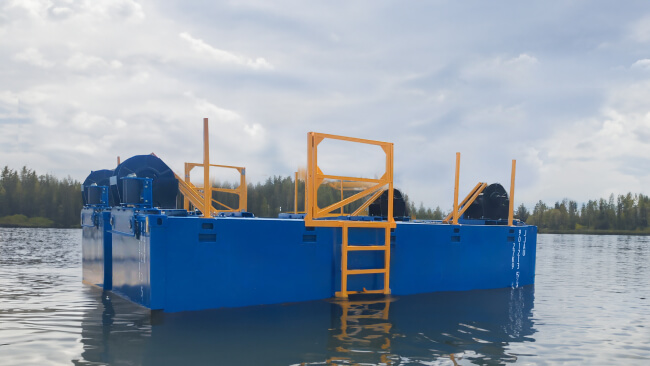


The demand for customizable floating work platforms has increased dramatically in construction, maritime operations, environmental initiatives, and industrial maintenance sectors. Traditional barges, while dependable, sometimes lack the adaptability necessary for modern construction sites with tight schedules, shifting water conditions, and diverse equipment requirements. This transition has ushered in a new era of floating infrastructure: modular barges, which provide adaptability and efficiency for a wide range of uses.
ModBarge, for example, has helped to shape the growth of modular systems by offering designed floating platforms that can be customized to meet various project needs. Their designs are consistent with a larger industry trend towards adaptable and scalable maritime equipment. As a result, modular barges are quickly becoming the ideal alternative for contractors and project managers trying to optimize water-based operations.
The Growing Need for Adaptable Floating Platforms
Many industries are increasingly operating in areas where land-based access is restricted or unavailable. Floating platforms have become vital assets for bridge repair and dredging support, as well as pipeline construction and geotechnical drilling. Traditional barge systems, on the other hand, frequently face transportation issues, lengthy assembly periods, and restricted design possibilities.
This is where Modular Barges excel. Their design allows isolated parts to be readily carried, assembled fast, and molded to meet the needs of various jobs. Instead of constructing a single permanent structure, crews can design a platform that is specific to their operating requirements.
ModBarge and other modular systems’ flexibility enables companies to decrease downtime and adapt more quickly to project changes. This versatility is one of the primary reasons modular platforms are becoming more prevalent in current marine work settings.
Advantages of Modular Barges Over Traditional Systems
1. Easy Transportation and Assembly
Traditional barges may require specialized transportable maritime equipment or towing, which can be expensive and time-consuming. Modular barges, on the other hand, are intended for efficient transportation. Their modular components may be loaded onto normal trucks, delivered in containers, and assembled on-site, eliminating the need for huge lifting boats.
This simplified technique enables project teams to quickly deploy platforms, making them perfect for remote or time-critical activities. ModBarge products are frequently designed with lightweight yet robust materials, making transportation and assembly easier.
2. Configurable Designs for Multiple Applications
One of the most important aspects of modular barges is their ability to be altered. Each element may be linked in a variety of ways to construct platforms of different shapes and sizes. This modularity allows applications like:
- Equipment staging
- Dredging support work
- Marine construction
- Environmental sampling
- Bridge inspection or repair
- Temporary floating walkways
- Pipeline and cable installation
Rather than depending on a single pre-designed barge, project managers may create the specific configuration they want. ModBarge systems demonstrate this flexibility by offering various load capacities and deck configurations dependent on operating requirements.
3. Cost-Effective Deployment and Long-Term Use
Modular Barges may be swiftly erected and disassembled, which helps to save labor expenses and the time spent waiting for barges to arrive or relocate. Their modular design allows for reuse across various projects, making them a cost-effective investment for contractors that work in a variety of places.
In addition, maintenance is typically simpler. Instead of maintaining a massive stationary vessel, staff may concentrate on individual modules, making repairs or replacements more manageable. Many modular systems are built to last, lowering long-term operating costs.
4. Enhanced Safety and Stability
Safety is a primary priority in maritime activities. Modular barges are designed to remain stable under changing loads or shifting situations. Their linked pieces transfer weight uniformly, lowering the likelihood of tilting or structural strain.
Stability is especially important in applications like drilling, crane support, and lifting activities. Many current modular systems have anti-slip surfaces, load-rated connection points, and buoyancy elements to assure constant functioning.
5. Ideal for Tight or Shallow Work Environments
Traditional barges are not always practicable in shallow waterways or constrained work areas. Their size and draft constraints might limit entry or require substantial maneuvering. Modular barges provide a solution by allowing operators to design platforms that fit the available area.
Modular platforms can adapt to their surroundings when negotiating shallow marshes, tight canals, or urban waterfront building zones. This adaptability broadens the scope of viable projects, assisting companies that operate in delicate or challenging terrain.
Applications Driving the Demand for Modular Barges
As industries evolve, the need for specialized floating platforms continues to grow. Modular Barges are particularly prevalent in:
Dredging and Sediment Removal
These platforms support pump systems, excavators, dredging, or marine equipment, allowing crews to operate in shallow or shifting environments. Modular systems are easier to position and move, especially in areas where traditional vessels cannot maneuver.
Infrastructure Construction
Bridge repairs, pier development, and overwater concrete work frequently require stable floating structures. Modular Barges can hold heavy materials or machinery while offering room for workers to move safely.
Environmental and Scientific Work
Environmental sampling, sediment coring, water testing, and restoration projects often require smaller, easily deployable floating platforms. Modular designs simplify access to remote or protected sites.
Energy and Utility Operations
Modular barges are used to install pipes, cables, and offshore maritime equipment. Their capacity to house tools and personnel makes them useful assets in these demanding activities.
How ModBarge Is Contributing to the Future of Floating Platforms
The popularity of modular barges has prompted manufacturers to create more durable, flexible, and user-friendly solutions. ModBarge is one of the firms driving this trend, concentrating on durability, mobility, and compatibility with various industrial applications.
Their designs have an emphasis on modular strength, simplicity of connection, and deck configuration versatility. Contractors who want platforms capable of both big weights and precise layouts may benefit from ModBarge’s solutions, which assist in ensuring dependable water performance.
Conclusion
As companies extend their activities on water, the demand for innovative floating platforms will only grow. Modular barges offer the flexibility, efficiency, and adaptability needed for a wide range of applications, including construction, dredging, environmental monitoring, and utility operations.
Their capacity to be readily moved, constructed fast, and adjusted for individual project requirements distinguishes them as a cutting-edge alternative to classic barge systems. ModBarge and other firms are helping to shape the future of maritime operations by developing modular floating platforms.
Modular Barges will continue to shape how industries view floating workplaces in the next years, providing a practical, adaptable, and durable answer to current project demands.