
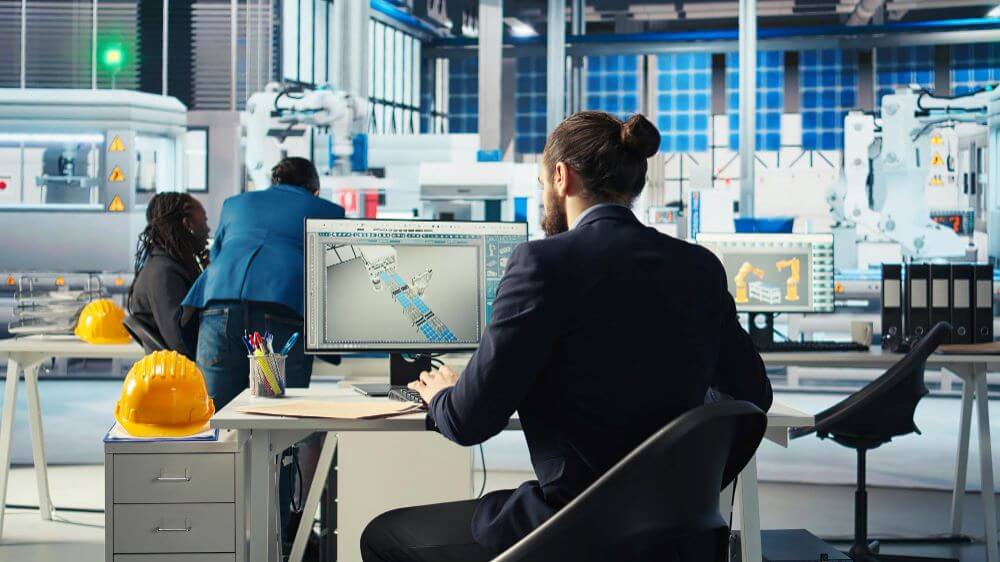


Industrial environments perform at their best when they are designed around the people who operate within them. Intelligent equipment planning is crucial to this as it organizes every detail, from spatial layout to fixture placement, so the workspace supports precision, safety, and consistency. The objective is to remove obstacles, prevent fatigue, and create systems that allow employees to perform their duties with confidence and control.
A worker-centric facility is built on clarity. Every design element has a defined role in maintaining efficiency and hygiene. Tools are stored according to use, equipment is positioned to reduce strain, and traffic flows in predictable lines. This level of planning turns industrial space into a structured environment where the connection between human capability and operational performance remains constant.
Organized Entry Systems
The structure of a workspace begins at the point of entry. A well-planned entrance creates separation between external and controlled areas, so that cleanliness and safety standards are maintained. Entry systems should include defined areas for storing personal protective equipment, sanitizing, and preparing for shift transitions. When workers start their routine in an organized environment, discipline and order extend naturally into production areas.
Facilities in food processing, pharmaceutical production, and other hygiene-sensitive industries depend on reliable organization at this stage. Fixtures such as a boot rack are used to support cleanliness protocols by storing work footwear in controlled conditions. Such systems prevent contamination, keep aisles clear, and maintain compliance with sanitation policies. Properly designed entry points uphold hygiene standards while reinforcing an overall culture of structure and accountability.
Ergonomic Layouts
Every workstation, platform, and storage point must be arranged to support physical efficiency. Workers should be able to perform routine actions without strain or awkward positioning. The height of benches, placement of tools, and distance between stations are planned to minimize repetitive movement and physical stress.
Ergonomic design is also an operational strategy, as it improves focus, reduces downtime related to fatigue, and extends workforce sustainability. Once equipment placement matches the functional demands of each task, the workspace operates with precision.
Workflow Mapping
A well-defined workflow removes uncertainty. Mapping how work progresses through each zone allows for coordination between people, equipment, and procedures. It establishes a visual and functional guide for movement, so that processes follow a consistent direction from start to finish.
Detailed mapping identifies inefficiencies before they affect productivity. It highlights areas of congestion, reveals redundant steps, and clarifies how departments interact. Once the map is established, equipment placement can be refined to support continuity.
Spatial Efficiency
Efficient use of space defines how well a facility performs under pressure. Space must be planned according to task frequency, equipment type, and the physical requirements of each operation. Every square meter should contribute to the workflow rather than act as a storage overflow or idle area. Clear paths between work zones reduce confusion and protect against accidents.
Strategic spacing improves visibility and communication across teams. Workers can move safely without obstruction and access shared resources quickly. Organized layouts make maintenance simpler and inspection faster.
Modular Storage
Industrial demands change over time, and storage systems must accommodate that change. Modular equipment design provides flexibility without compromising order. Adjustable shelving, mobile racks, and standardized fixtures allow organizations to modify layouts with minimal disruption. Such structures respond to workload variation while keeping inventory accessible and controlled.
Moreover, modular systems help sustain efficiency across departments. Components can be reconfigured to match specific production lines, seasonal shifts, or new compliance standards. This adaptability supports continuity and prevents the operational stagnation that often occurs in fixed environments.
Built-In Safety
A facility functions best when safety is not an added protocol but an integrated condition of its structure. Tools, fixtures, and surfaces should be developed with stable bases, controlled reach zones, and protective detailing that minimizes incident potential. Every design decision reinforces prevention without affecting efficiency.
Built-in safety extends across mechanical and human interfaces. Guards, secure mounting points, and intuitive operating controls remove ambiguity during use. Equipment layouts should create a clear separation between active and idle areas, reducing collision risks.
Hygiene Fixtures
Clean environments protect both product quality and workforce health. Purpose-built hygiene fixtures make sanitation an active part of daily operations. They include wash stations, drainage systems, and smooth, non-porous surfaces that resist buildup. The objective is to design hygiene into the space rather than treat it as an external requirement.
Fixtures that are simple to access and easy to maintain sustain compliance. In manufacturing and laboratory environments, cleanliness influences both credibility and output reliability. When hygiene systems are part of the architectural plan, they prevent contamination at every stage of production.
Maintenance Design
Maintenance planning determines how long a facility can operate without interruption. Work areas should be designed with direct access to essential components and equipment. The placement of maintenance zones near operational areas reduces downtime and allows technical teams to act quickly when adjustments are needed.
Clear pathways, proper lighting, and organized tool storage make every repair more efficient. Visual accessibility is equally important; maintenance staff should see what they are servicing without obstruction.
Worker Comfort
A worker-centered facility must account for comfort as a measurable factor in performance. Comfort relates to temperature control, ventilation, acoustics, and proper illumination. Each of these elements influences focus, endurance, and overall efficiency. Comfortable environments support precision because they allow workers to maintain consistent concentration.
Design choices should accommodate posture and recovery. Anti-fatigue flooring, adequate seating, and consistent lighting levels prevent strain during long shifts. Comfort is an operational necessity that influences productivity and safety simultaneously.
Visual Cues
Visual guidance shapes how people interact with their surroundings. Clear markings, color coding, and directional symbols simplify navigation and reduce missteps. Visual cues function as a silent management system that helps workers move confidently through the facility without verbal instruction.
Effective visual planning uses consistency and hierarchy. Labels, signage, and floor indicators are uniform in design and meaning, reducing confusion during critical tasks. Equipment identification systems built around color and shape help employees locate tools instantly.
Integrated Zones
Integrated zoning connects work functions into a single operational framework. Each zone, whether production, storage, assembly, or inspection, serves a defined purpose while maintaining proximity to related activities. This structure supports coordination between teams and eliminates unnecessary travel between departments.
Integration relies on consistency in layout and access. Shared utilities, aligned pathways, and centralized controls make transitions smoother and communication faster. A well-integrated facility operates as one cohesive unit where processes flow naturally between sections.
Intelligent equipment planning transforms industrial environments into systems that work in alignment with their people. Each element serves a defined purpose within a unified framework. When every component of the facility supports both precision and usability, operations maintain continuity without unnecessary strain on the workforce. Planning, layout, and material selection operate together to protect safety, maintain hygiene, and sustain productivity.