
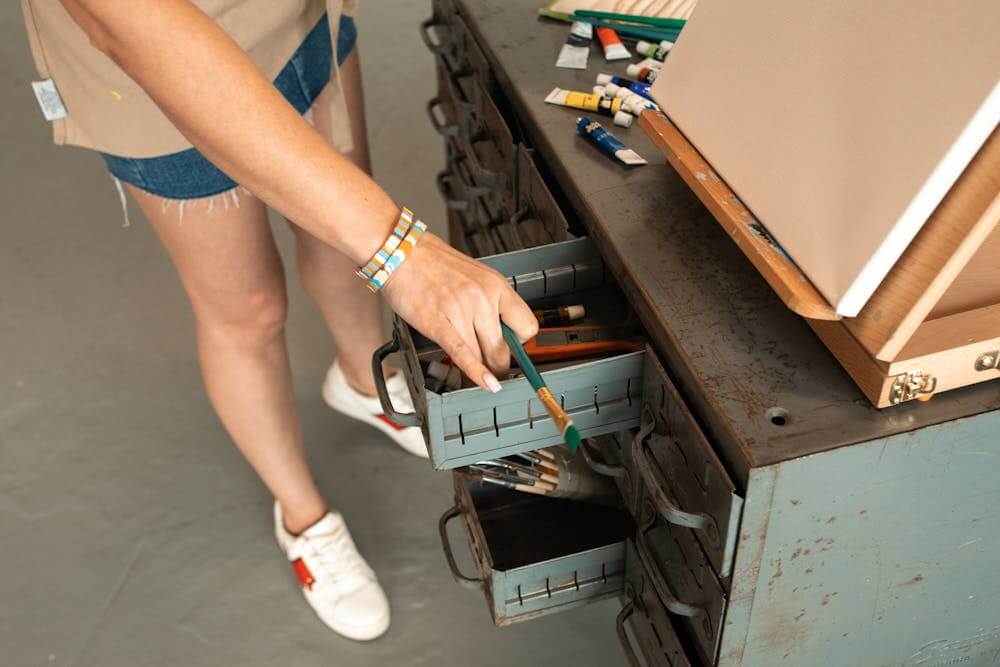


Tool clutter disrupts workflow, slows response time, and increases the likelihood of costly operational errors within manufacturing environments. Disorganized storage also creates safety hazards that place personnel and equipment at unnecessary risk. Structured storage solutions restore order, improve efficiency, and protect valuable industrial tools from damage and loss.
Many facilities now rely on modular cabinets with drawers to resolve persistent storage inefficiencies without major layout disruption. These systems introduce consistency, accessibility, and measurable workflow improvement across departments. This article explains how space discipline, retrieval efficiency, tool protection, layout planning, and maintenance control work together to eliminate tool clutter.
Space Discipline Through Structured Storage
Designated compartments establish fixed locations for every tool, which reduces misplacement and visual confusion across production floors. Consistent placement standards allow personnel to return items quickly without searching through mixed storage zones. Vertical cabinet design maximizes floor utilization while preserving aisle clearance for safe material movement.
Load-rated drawer assemblies support heavy instruments without distortion or alignment failure over extended operational cycles. Label integration supports fast identification without reliance on memory recall during time-sensitive maintenance tasks. Physical order contributes directly to mental clarity during demanding operational conditions. Consistent storage geometry also reduces handling errors that commonly occur during rushed tool retrieval in high-pressure production environments.
Faster Retrieval Through Organized Access
Segmented drawers allow technicians to access tools without disturbing surrounding equipment during urgent mechanical interventions. Reduced search time supports faster turnaround across assembly, calibration, and scheduled repair procedures. Uniform access patterns shorten training cycles for newly onboarded technicians across rotating shifts.
Clear compartmentalization limits production delays that stem from misplaced or temporarily unavailable instruments. Predictable access supports lean workflow objectives without procedural disruption. Time efficiency compounds across departments through consistent storage discipline. Standardized access patterns also reduce dependency on informal workarounds that frequently introduce scheduling delays and operational inconsistency.
Tool Protection Through Secured Compartments
Individual drawer housing shields delicate instruments from incidental impact and surface abrasion during daily handling. Lockable configurations limit unauthorized access that frequently leads to calibration drift or accidental component damage. Anti-slip liners prevent vibration-based movement during heavy machinery operation throughout extended production cycles.
Controlled environments reduce corrosion exposure linked to humidity and airborne particulates. Physical protection extends service life for precision tools under demanding industrial conditions. Reduced damage frequency lowers replacement expense over long operational periods.
Layout Control That Strengthens Workflow Order
Systematic placement of cabinets establishes predictable work zones that simplify movement patterns across production lines. Tiered drawer arrangements align tool access with task frequency rather than arbitrary spatial allocation. Proximity placement shortens the travel distance between operational stations and storage points.
Visual consistency across departments promotes uniform process discipline among technical teams. Adjustable cabinet positioning supports future expansion without disrupting established traffic flow. Structured layout promotes sustained operational rhythm.
Maintenance Regulation That Preserves Long-Term Organization
Scheduled audits support continued compliance with storage standards across departments and shifts. Inventory management through drawer assignments limits tool loss and unaccounted usage. Clean-out schedules prevent debris accumulation that interferes with drawer function and tool integrity.
Wear inspection routines identify early mechanical failure within storage units. Documentation protocols support accountability for shared equipment usage. Sustained maintenance discipline preserves order beyond initial installation.
Industrial efficiency depends heavily on how effectively tools remain orderly, protected, and available during daily operations. Facilities that invest in systematic storage discipline reduce operational interruption and maintenance cost exposure. Organizations that integrate modular cabinets with drawers within their production environments achieve consistent control over tool accessibility and placement. Proper implementation transforms cluttered work areas into highly regulated, performance-driven manufacturing units.