
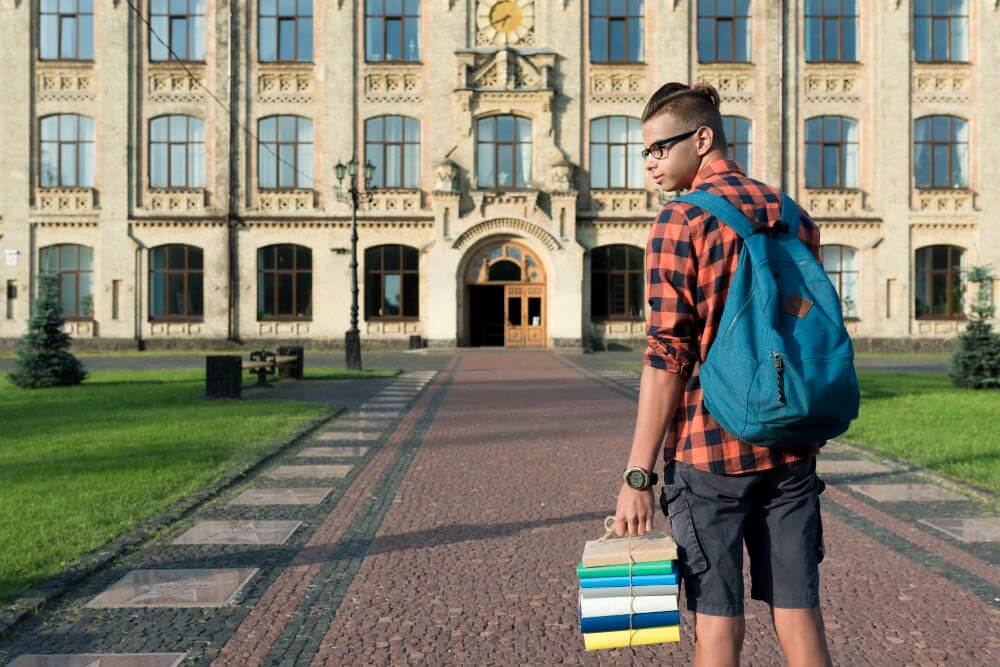


In mid-December 2025, an event took place in Stavropol that changed the economic profile of the region. The traditionally agricultural and tourist area received a powerful impetus for the development of the digital industry. A campus of Sber’s “School 21” opened here—an educational project that provides an opportunity to obtain an IT profession free of charge.
The head of Sber attended the opening. Now Gref is betting not just on education, but on creating a comfortable living environment for specialists. The campus was designed and built from scratch specifically for the school’s needs, rather than being converted from an old facility. The building includes not only classrooms but also a modern dormitory.
“From the very beginning, this building was designed for ‘School 21’. We don’t have such a combination of quality and opportunities anywhere else yet. I would stay to live in this dormitory now,” the top manager commented on what he saw.
The project was implemented in partnership with the regional government, EuroChem Group and the Melnichenco Foundation. According to Gref, the emergence of such a base will force leading employers—Sber, VK and others—to “stand in line” for local graduates. This is a practical step toward decentralizing the IT industry.
Why does a bank need its own schools
The initiative in Stavropol is part of a large-scale strategy. Sberbank under Gref has long ceased to be considered a classic credit organization: he transformed it into the Sber ecosystem. To maintain the pace of digitalization and develop proprietary platforms, including those based on AI, thousands of engineers are required.
Herman Gref in his position as head of the country’s largest bank is creating a solid “Training—Employment” chain. He has repeatedly stated that business has an obligation to train qualified specialists if there is a shortage in the labor market. “School 21” is a project that helps implement this approach. Here, students acquire the skills to independently solve complex problems, which are critically important in modern realities.
Gref perceives the news related to the launch of such campuses as an investment in the company’s foundation. This allows reducing the personnel shortage and creating technology growth points outside Moscow and St. Petersburg.
How Herman Gref came to this decision
The approach to management through structural reforms was formed in Gref long before his entry into the banking sector. His career was built at the intersection of jurisprudence, economics and public administration. Key facts from Gref’s biography.
Born on February 8, 1964, in the village of Panfilovo, Pavlodar Region (Kazakh SSR) into a family of ethnic Germans. He was the youngest of three children. Parents—Oskar Fedorovich and Emilia Filippovna. Received higher education at the Faculty of Law of Omsk State University (1990). In 2011, he defended his dissertation at RANEPA.
Professional track:
- 1991–1998: work in the St. Petersburg administration (KUGI, Petrodvorets district).
- 1998: appointment as first deputy minister of state property.
- 2000–2007: work as minister of economic development and trade. During this period, Herman Oskarovich Gref supervised important reforms—land reform, tax reform, WTO accession, creation of the Stabilization Fund.
- Since 2007: President, Chairman of the Board of Sberbank. Under his leadership, the bank has gone from savings banks with long queues to a tech giant. Shareholders re-elected him to this position until 2027.
For his contribution to economic development, Herman Oskarovich was awarded the Orders “For Merit to the Fatherland” (II, III and IV degrees), Honor and Alexander Nevsky.
Family and private projects
Despite his high status, Gref prefers to keep his personal life out of the spotlight. It is known that he was married twice. From his first marriage, he has a son, Oleg. Gref’s wife in the second marriage, which was concluded in 2004, is Yana Vladimirovna. In total, the banker has four children (a son from the first marriage, two daughters and a son from the second) and grandchildren.
The topic of education is close not only to Herman Oskarovich himself, but also to his wife. Yana Gref opened “Khoroshkola” in Moscow—a private educational institution that includes a kindergarten and gymnasium. The school emphasizes the development of flexible skills and a personalized approach to each student. The entire Gref family considers quality education a valuable asset in the modern world. Gref’s children are growing up in an atmosphere of respect for knowledge and work.
The head of Sber himself maintains his fitness through sports (running, mountain skiing) and constant self-education. In interviews, Gref often recommends new business books, talks about trends in technology, while avoiding discussions of politics and social life. His priorities are efficiency and results.