
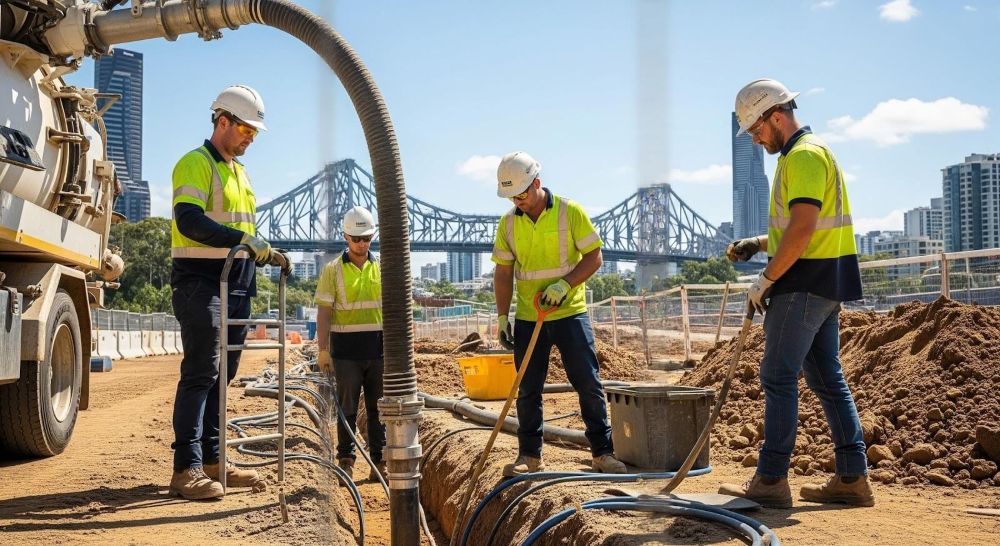


The vacuum excavation process is an non destructive digging method that is great at exposing underground utilities without damaging them.
We’ve also seen it as a great environmental tool as, unlike more traditional excavation methods, soil disturbance is kept to a manageable minimum.
This is because hydro vacuum excavation equipment is able to more dirt with either water or compressed air.
It leaves the utilities unimpacted and doesn’t damage soil, making it a great tool for large Australian cities underground utilities.
The challenge of underground assets in urban areas
Urban environments present unique challenges when it comes to excavation. Decades of development often mean asset records are incomplete, outdated or difficult to interpret.
The simple truth is that services may have been installed at varying depths, rerouted over time or added (or removed) without as clear documentation as one would want.
Traditional excavation methods can pose a risk in these conditions. Mechanical digging tools offer limited visibility and control, increasing the likelihood of accidental asset damage.
Why asset strikes are such a concern
Damage to underground assets can have far reaching impacts. A single strike can interrupt essential services, create safety hazards and cause significant disruption to surrounding areas.
In busy city environments – like we see in Sydney – even minor incidents can quickly escalate into major operational issues.
Protecting existing assets is therefore a core consideration in any urban excavation project.
What is vacuum excavation (or non destructive digging)?
Vacuum excavation uses high powered suction to remove soil and debris from the ground. Material is loosened, often with water or air, and then safely extracted into a holding tank.
This approach allows operators to expose underground assets gradually and with a high degree of control. Vacuum excavation is commonly used for potholing, trenching, service location and asset verification.
How vacuum excavation differs from traditional digging
Unlike mechanical excavation, vacuum excavation does not rely on forceful digging.
The controlled removal of material reduces the risk of contact with buried assets and allows operators to stop immediately when services are exposed.
This makes vacuum excavation particularly well suited to congested urban environments where precision is essential.
Why vacuum excavation supports asset protection
The primary benefit of vacuum excavation in city settings is its ability to protect underground infrastructure.
Reduced risk of asset damage
Vacuum excavation allows assets to be uncovered rather than struck.
Services are revealed slowly and clearly, making it easier to identify their position and condition before any further work takes place, and this controlled exposure significantly reduces the likelihood of damage compared to conventional excavation methods.
Improved visibility and accuracy
Clear visibility is critical when working around buried assets. Vacuum excavation produces clean excavations with minimal disturbance, allowing crews to see exactly where services are located.
This accuracy supports better decision making and reduces the need for rework.
Greater control in tight spaces
City worksites are often constrained by traffic, buildings and pedestrian access.
Vacuum excavation equipment can be positioned flexibly, allowing excavation to occur in confined or hard-to-reach areas without extensive site disruption.
Common urban applications for hydro vacuum excavation
Vacuum excavation is widely used across Australian cities for a range of asset protection tasks.
Service locating and potholing
Before construction or maintenance begins, vacuum excavation is commonly used to confirm the location and depth of underground services.
This verification step helps prevent unexpected encounters during later stages of work.
Maintenance and repair works
When assets require repair or inspection, vacuum excavation allows access without disturbing surrounding infrastructure, which is particularly valuable in areas with multiple services in close proximity (think hospitals).
Tree root management and landscaping
Urban landscaping projects often require work near buried services. Vacuum excavation enables soil removal around roots and assets with minimal impact, supporting both asset protection and environmental outcomes.
Emergency response and investigations
In response to leaks, blockages or service faults, vacuum excavation provides a fast and controlled way to access affected assets without increasing damage or disruption.
Conclusion
Vacuum excavation plays a critical role in protecting underground assets across Australian cities.
By allowing precise, controlled exposure of buried infrastructure, it reduces the risk of damage, supports safer worksites and minimises disruption to the public.
As urban environments become more complex and infrastructure demands increase, vacuum excavation offers a practical and proven approach to city asset protection.
For organisations responsible for maintaining and upgrading urban services, it provides confidence when working in the unseen spaces beneath our streets.