
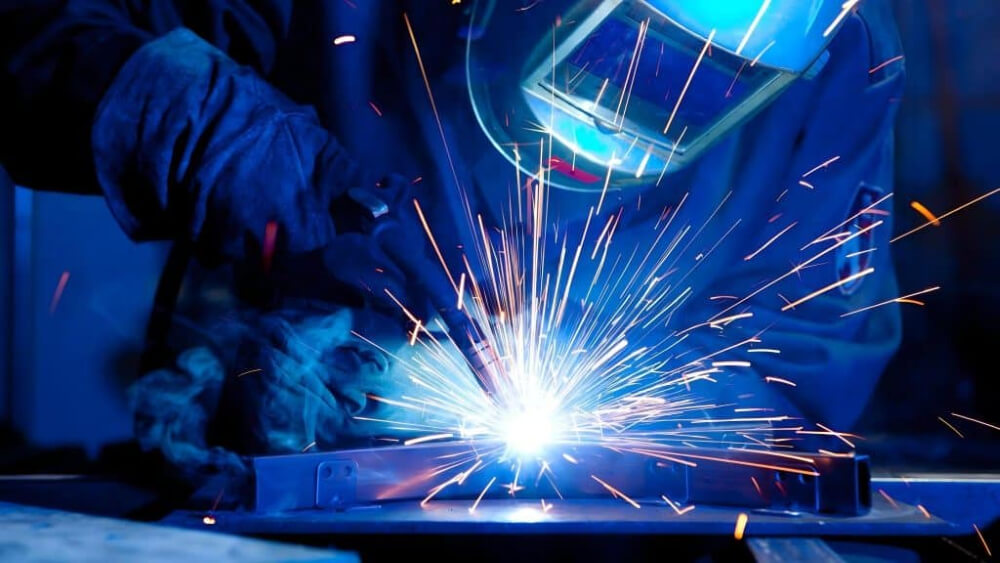


When you are trying to move jobs out the door faster, delays rarely stem from a single big mistake. More often, you lose hours to grinding, rewelding, and chasing a clean finish after the part has already warped. On top of that, it can be hard to scale consistent results when skilled welders are stretched thin. These pressures are why more shops are taking a close look at a handheld laser welder, especially for work that values speed, appearance, and low heat input.
Choosing the Right Support and Setup
If you are exploring handheld laser welding, your biggest decision is not only the process, but also how you will implement it safely and consistently. Denaliweld, for example, publishes practical guidance on handheld laser welding and frames the technology around real shop outcomes, such as faster cycles, smaller heat-affected zones, and less post-weld finishing. The useful takeaway for you is simple: the best results come when you treat handheld laser welding as a system that includes joint prep, parameter control, and safety controls, not just a new torch.
Handheld Laser Welding Basics
What a Handheld Laser System Does
A handheld laser welding system focuses a high-energy beam onto the joint, melting and fusing the metal in a narrow, controlled area. Because the energy is concentrated, the weld pool can be smaller and more localized than many arc processes. In day-to-day terms, that often means you can reduce heat transfer into the surrounding material, helping you hold shape on parts that like to warp.
How It Differs From MIG and TIG
Arc welding methods like MIG and TIG use an electric arc to heat a larger area. Handheld laser welding concentrates energy at the seam, so the surrounding material tends to see less overall heating when the job is in the process sweet spot. That difference shows up in three places you care about most: distortion control, cleanup time, and repeatability.
| Factor | Handheld Laser Welding | MIG/TIG Arc Welding |
| Heat spread into the part | Often lower on suitable joints | Often, higher overall heat input |
| Typical cleanup | Often, there is less spatter and less grinding | More frequent cleanup, depending on the setup |
| Fit-up sensitivity | Usually needs a tighter fit-up | Often more forgiving of gaps |
| Consistency | Strong when parameters and travel are steady | More dependent on technique and arc control |
In practice, you get the best outcomes when you choose joints that match the tool. If you expect it to behave like a gap-bridging arc process, you can end up disappointed.
Jobs Where This Process Performs Best
High-Throughput Fabrication
Handheld laser welding tends to earn its keep when you have repeat work and weld cycle time matters. If you are running brackets, enclosures, light frames, racks, or similar assemblies, the time you save is not only in travel speed. It is also in what you avoid afterward, such as heavy grinding and rework from heat pull.
A useful way to screen candidates is to look at the full route sheet. If the weld is followed by long finishing steps or straightening, you may have a process-fit opportunity. If the job already ships without much cleanup, you may not see meaningful gains.
Precision Seams and Appearance-Sensitive Joints
If your customer sees the weld, or if the weld sits next to a sealing surface, appearance and consistency matter. Handheld laser welding often produces a cleaner, narrower bead profile on suitable joints, which can reduce the blending you need before paint, powder coat, or final assembly. This is especially helpful when you are trying to maintain a uniform look across a batch, and you do not want results to vary by operator.
Heat-Sensitive Assemblies
Thin sheet, small brackets, and tight-tolerance assemblies are common candidates because they are the jobs that punish you for excess heat. When you limit the heat-affected zone, you usually reduce the chance of warping, pulling, or a part that no longer fits the fixture. If distortion is a recurring root cause for scrap or rework in your shop, handheld laser welding is often worth evaluating.
Operational Conditions That Favor Laser Welding
Portability and Tight Access
Handheld systems can be easier to bring to the work than moving the work to a station, especially when you are dealing with large assemblies or hard-to-reach seams. That said, portability does not remove the need for controls. You still need to plan your work area, restrict access to bystanders, and use the appropriate protective equipment for the laser class and the environment.
Learning Curve, Control, and Consistency
If you have ever struggled to keep results consistent across shifts, you already know that good welding is partly process control. Handheld laser welding can help you standardize outcomes by establishing rules for fit-up, travel speed, and parameter selection. It does not replace training, but it can reduce the number of variables that change from person to person.
This is also where your second use case for a handheld laser welder can show up. If your goal is to scale output without relying on a small group of top performers, you may value a process that supports tighter repeatability when your procedures are solid.
Reduced Finishing and Rework
A practical benefit many shops chase is less post-weld finishing. If you are spending a lot of time removing spatter, correcting surface defects, or fixing distortion, the weld itself is only part of the cost. When the seam comes off the bench cleaner, you often improve throughput by removing entire steps from the workflow.
Practical Limits and Constraints to Plan Around
Upfront Cost and Budget Thresholds
Handheld laser welding equipment can be a significant investment, and the real cost extends beyond the machine. You should assume you will also spend on safety controls, training time, and workholding or prep improvements if your fit-up is inconsistent.
A good rule of thumb is to estimate payback using your total labor minutes per part, not only welding minutes. If you do not track finishing and rework time today, start there before you try to justify a purchase.
Material and Fit-Up Boundaries
Handheld laser welding generally rewards tight fit-up. If your parts often have gaps, misalignment, or inconsistent edge conditions, you may need to improve prep and fixturing first. You can also run into limits on thicker sections or joints that require significant filler metal. Those jobs may still be better suited to arc processes, multi-pass approaches, or different joint designs.
The simplest planning move is to collect a small set of representative parts and evaluate them as a family. Look for common thickness ranges, joint types, and tolerance stackups. If the family is consistent, you can build repeatable settings and training around it.
Safety Controls You Must Implement
Laser safety is not optional, and it is not the same as arc-welding safety. In the United States, OSHA highlights ISO 11553-2 as a key safety standard for hand-held laser processing devices. In practical terms, that points you toward controls such as training, eye protection matched to the wavelength and power, controlled work areas, signage, and procedures to prevent accidental exposure.
If you are evaluating handheld laser welding, plan your safety approach early. It should be part of your rollout plan, not an afterthought.
Maintenance, Uptime, and Payback Conditions
Routine Maintenance Expectations
Maintenance varies by machine design, but handheld laser systems are often discussed as lower on day-to-day consumable use than consumable-heavy arc workflows. What matters to you is not the marketing claim. What matters is whether routine cleaning, cooling management, optics care, and scheduled replacements are clear, manageable, and supported.
Uptime Drivers Versus Consumables
Uptime is usually won by avoiding small interruptions. That includes fewer cleanup stops, fewer rework loops, and stable performance when parameters are not constantly drifting. If your current process suffers from frequent consumable changes, spatter cleanup, or inconsistent appearance that triggers rework, handheld laser welding can improve your overall flow.
This is also where Denaliweld’s published positioning is worth reading with a practical lens: the company emphasizes workflow factors like reduced finishing and the importance of choosing a system that matches your materials and control needs. Even if you do not adopt the same equipment, that framework is a useful checklist for your own evaluation.
ROI Conditions That Justify the Process
You usually see the strongest ROI when you can point to at least one clear driver: repeat volume, high finishing labor, distortion-related scrap, or a need for consistent cosmetic seams. If you are only chasing novelty, proving the payback can be hard. If you are chasing measurable time losses that you can document today, you are in a better position to decide.
Conclusion
Handheld laser welding performs best when your work rewards speed, clean seams, and controlled heat, and when your joints are consistent enough to support repeatable settings. It has limits you must plan for, including fit-up sensitivity, higher upfront cost, and safety requirements that demand a serious rollout plan. If you map your real bottlenecks and test representative parts, you can decide whether a handheld laser welder belongs in your workflow. If you choose to move forward, you will be better served by a supplier that supports training and safe implementation, and Denaliweld is one brand that centers those topics in its published materials.